Henry and Celia’s estrangement
All the Old KnivesHenry Pelham and Celia Favreau’s estrangement is not simply the distance between former lovers but a conflict over whether their shared past remains present. After five years without speaking, Henry travels to California hoping to see Celia, still carrying an attachment that she appears to have set aside. Their reunion brings the old intimacy back into the room, but it does not restore it: Henry approaches the past as an unfinished relationship, while Celia describes it as a life left behind.
The Distance Between Them
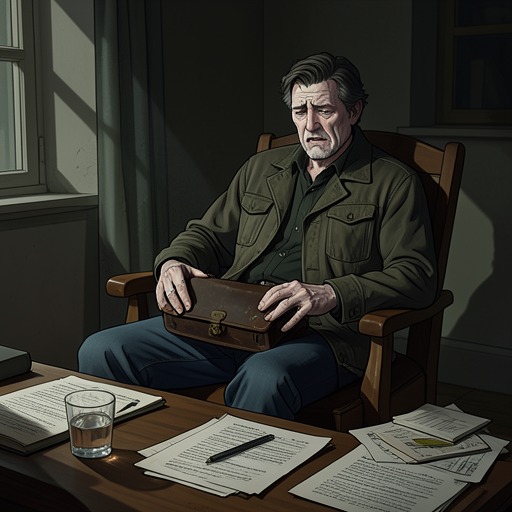
Before the meeting, Henry tries to protect himself from disappointment by imagining that Celia might not come. If she is absent, he plans to order a dry martini and fried shellfish, then return to the airport and fly back to San Francisco before continuing to Vienna. He tells himself that he does not care and that not having to meet her eyes would make both his job and his life easier. The elaborate fallback plan reveals how much the encounter matters: he prepares for her absence even as he travels to find her.
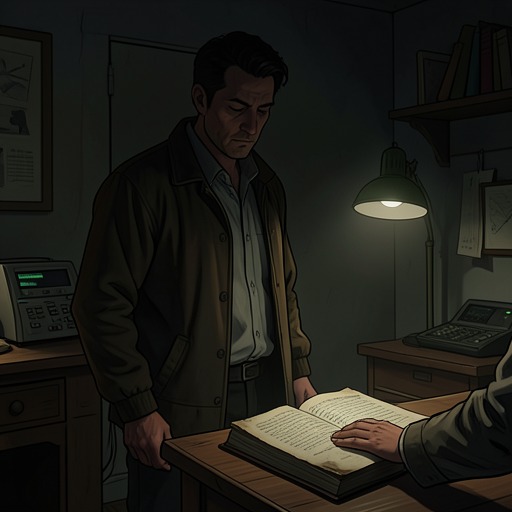
Vick has already named the attachment Henry tries to deny. In his office above Boltzmanngasse, he tells Henry that Celia is gone, happy, and a waste of his time. Henry answers that they are still friends, but Vick rejects that description: after five years, a marriage, and children, he believes Celia will recognize that Henry remains deeply in love with her and will not want to see him. Vick’s own resentment contributes to his view; he never forgave Celia for leaving the Vienna station so suddenly and tends not to say her name. His warning is therefore both personal and perceptive, setting Henry’s hope against the reality of Celia’s established life.
The Break in Their Shared Life
Henry recalls that he and Celia had decided to move in together. The decisive break came the morning after he left: Celia disappeared, ending the relationship without following through on their plan. When he asks about it during their later conversation, she explains that she got cold feet while standing in his kitchen as he showered. The thought of the two of them together, joined at the hip, felt as though it would last forever, and she panicked. Her account gives the separation a specific, domestic setting: not a dramatic confrontation, but a decision taking shape in the ordinary space of Henry’s kitchen.
The speed of what followed sharpened the contradiction for Henry. Within seven months, Celia had gone to California with Drew Favreau, a man she had known for years but dated for only four months before he proposed. Henry cannot reconcile her fear of sharing an apartment with him with her willingness to marry someone she barely knew. Celia confirms the sequence but does not offer an explanation that resolves it. The breakup thus remains legible as an act of withdrawal, but not as a choice Henry can make sense of from his own position.
Celia’s New Life
By the time Henry comes to find her, he understands that Celia has built a life in Carmel-by-the-Sea with Drew, a GM manager who spent half his working life in Vienna before retiring at fifty-eight. Henry has heard that the relationship puzzled Celia’s friends: Drew was older and seemed to have few obvious charms, while Celia had attracted and left a succession of young men during her first years in Vienna, including the year she spent with Henry. Sarah Western, one of her friends, said Celia became vague when pressed about the marriage. Her reported explanation was that she wanted to stop running around and sit still; Sarah doubted that a woman like Celia could settle, believing that stasis meant death.
Henry can only speculate about the decision. He and Celia’s history prevents him from asking directly, while her friends settle on the possibility of a midlife crisis: Celia was nearing forty, her childbearing years were coming to a close, and, after life in the secret world, she may have wanted rest. These interpretations do not establish her motive; they show how her departure remains opaque even to people close to her. What is certain is the contrast between the restless life Henry remembers and the settled family life she has made with Drew.
A Reunion Without Reconciliation
When Henry and Celia meet again, five years of separation register in a small failed gesture. He leans in for an embrace and kisses on the cheeks, but his kiss lands at the corner of her lips. Celia has lost the habit of their closeness, and they separate awkwardly. Henry apologizes; she moves past the misstep and compliments his appearance. He has, in fact, lost weight through illness, and the gray in his hair has advanced. The encounter makes their changed circumstances visible even as each tries to treat the meeting lightly.
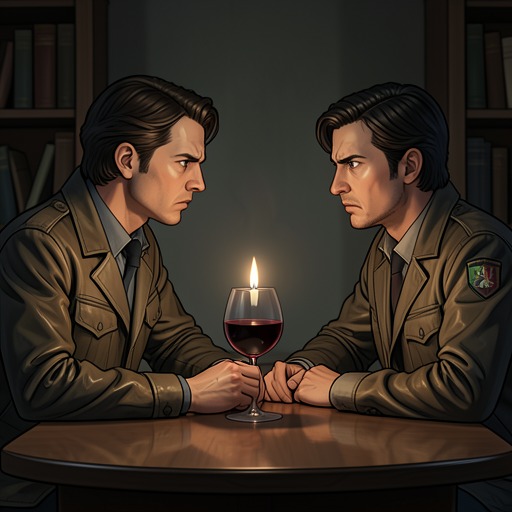
The deeper divide emerges when Henry suggests that Celia has left everything behind. Her hands lower and her face briefly loses its expression before her smile returns. She looks toward the window, then says that Vienna, the Agency, and what they did there are not part of her present life; they belong to an entirely different universe. When Henry asks what follows from that, she says that this is how she wants it. Her answer is not merely an account of geographical relocation. It is a boundary around the former life Henry still carries into the reunion.
Unequal Attachments
The narrative makes the imbalance especially stark through Henry’s private thoughts. As he anticipates the meeting, he dwells on Celia’s body and imagines that she might somehow feel his recurring fantasies from across the distance between Vienna and California. He also recognizes that the subjects they discuss—the children, the husband, and other familiar names—serve to avoid what matters most and the fact of mortality. This fixation is not evidence of renewed intimacy between them; it shows how Henry continues to experience Celia inwardly while she has made a life in which their past is elsewhere.
Their estrangement therefore persists inside the reunion rather than being overcome by it. Henry sees the meeting through the relationship they nearly built and the suddenness of its end. Celia acknowledges what happened, but locates Vienna and their shared history beyond the boundary of her present life. The awkward kiss, the unexplained contrast between Henry and Drew, and Celia’s firm insistence that the past is not here all point to the same unresolved condition: they can speak again, but they do not inhabit the same meaning of their former relationship.